FU FA
If my life had a prologue, it would open with a wobbly kid on tiptoes and a sharp-eyed grandfather quietly clocking that something wasn’t quite right.
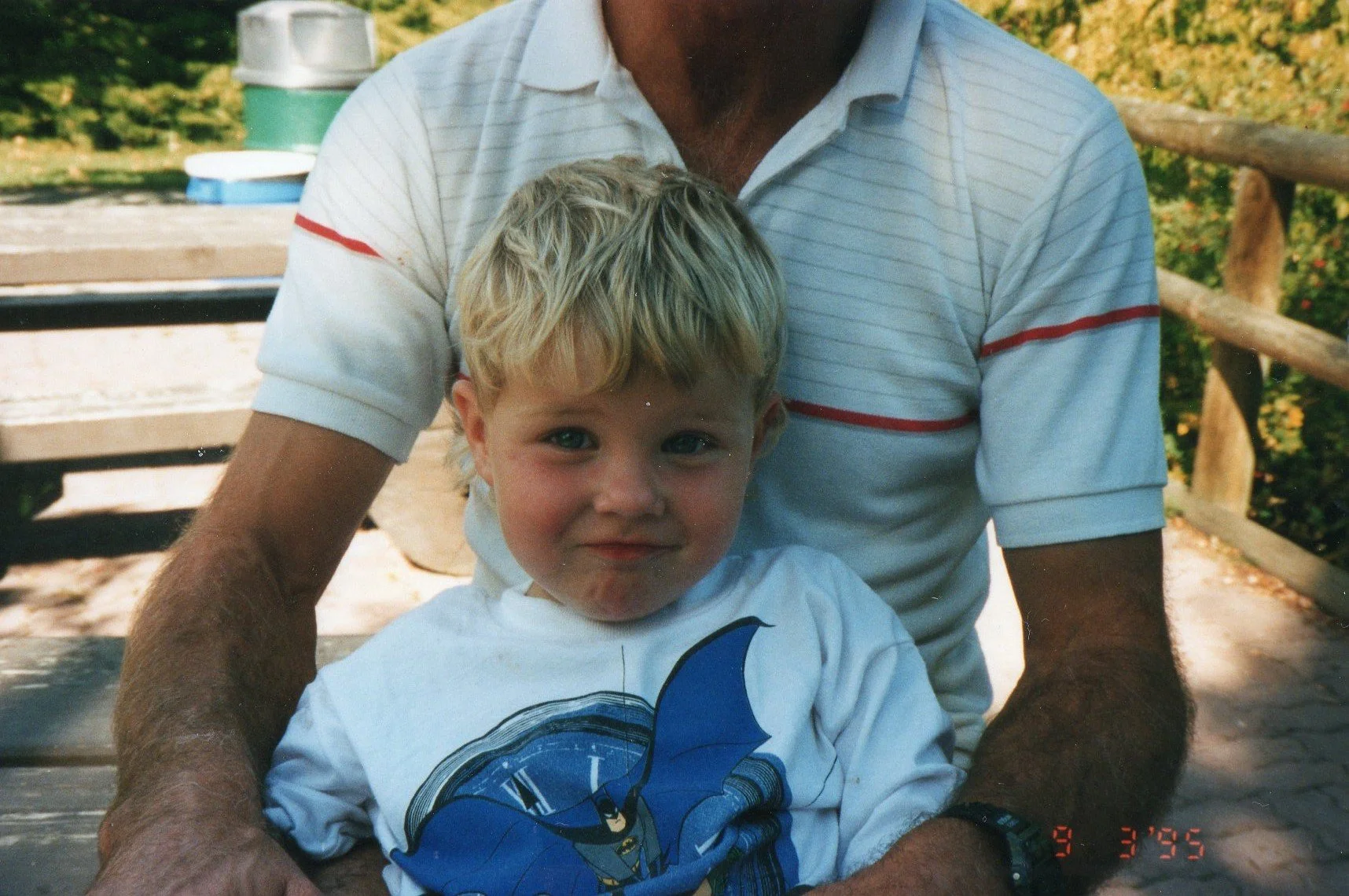
I am sitting on my Grandpa’s Lap, but he didn’t make the photo because its all about me and how adorable I was. Am not was.
It was Grandpa Hindley who first noticed I was clumsy and walking on my tiptoes more than most kids. At the time, it didn’t come with alarms or flashing lights, just a quiet observation filed away in the background. But as I started school, those little quirks became harder to ignore. In kindergarten, my teacher, Mrs. Brooks, noticed I was struggling with large muscle coordination. Simple things like using scissors were… let’s just say not my strong suit. She brought it up to my parents during the first parent-teacher meeting, planting the first real seed of concern.
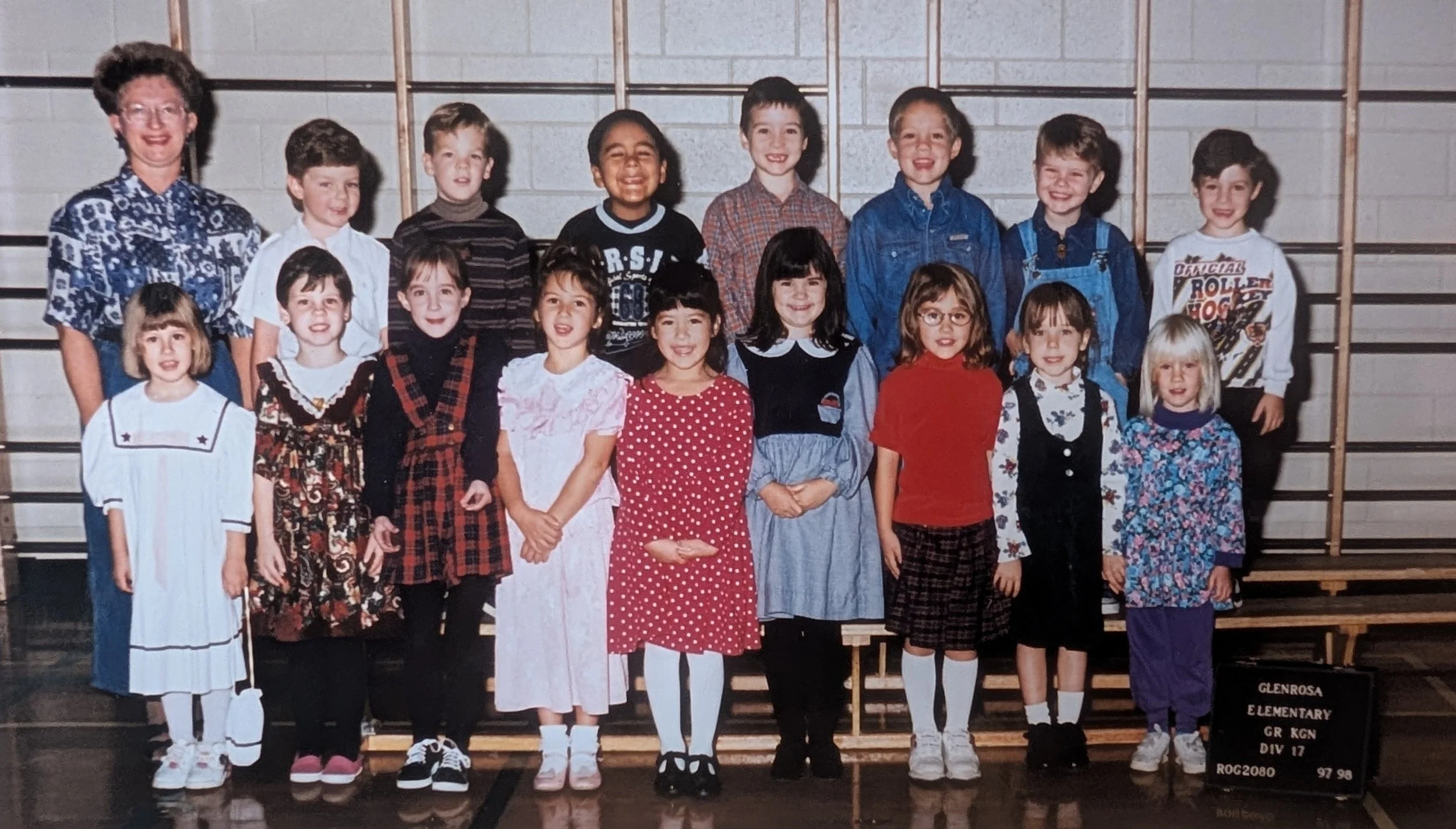
Ms Brooks Kindergarten Class
By the beginning of grade one, Ms. Kanda picked up where Mrs. Brooks left off. She told my parents that while kids develop at different speeds, my coordination seemed slower than expected for my age. My parents did what most would do and took me to the doctor. Twice, in fact, once at the start of kindergarten and again at the start of grade one. Both times, the same response came back: nothing to worry about. Kids develop differently. So my parents trusted that advice and carried on, figuring if the doctor wasn’t concerned, maybe they shouldn’t be either.
But Ms. Kanda wasn’t convinced. She had a habit of bringing guests into the classroom and filming their visits to share with families at the end of the year. One day, she brought in a physiotherapist to test the students’ reflexes. As he made his way through the class, tapping knees with that little rubber hammer, everything seemed routine… until he got to me. When he tapped my knee, my leg didn’t kick out. It didn’t twitch. It didn’t do anything. Even on video, you could see the concern on his face. That moment shifted things.
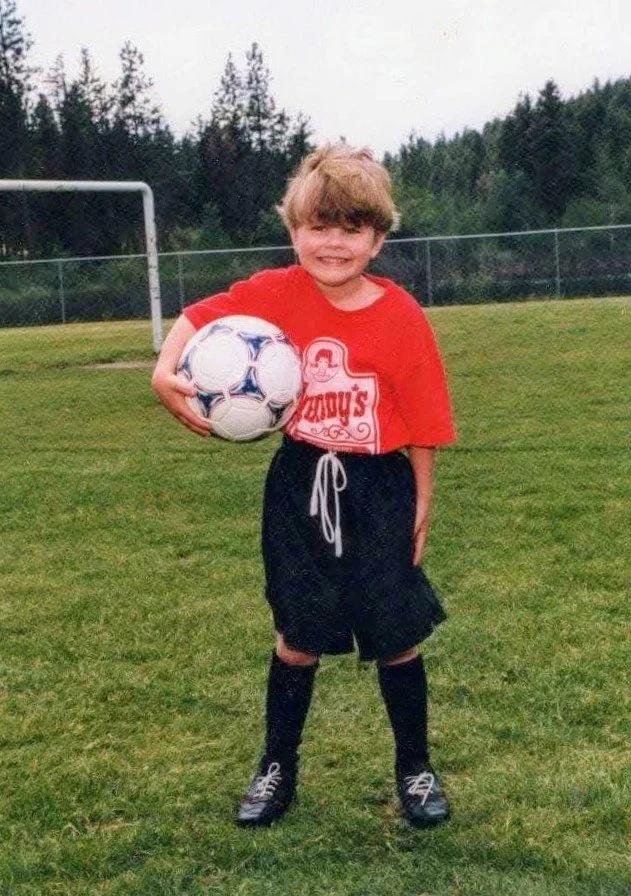
Depite my FA, I had a relatively normal childhood. I even played soccer for a few years.
Ms. Kanda reached out to my parents again, this time with more urgency. The principal, Mr. Tetreau, joined the conversation as well, bringing his own perspective as a parent of a child with a disability. Together, they explained what they were seeing and why they felt something wasn’t quite right. That led to a third visit to our family doctor. Once again, the response was the same, that kids develop at different rates, not all kids are going to be athletes, and there was no need to worry. But this time, my dad wasn’t leaving without answers. He told the doctor plainly that we weren’t leaving until we got a referral to a pediatrician. She warned it would be a waste of time for both you and the pediatrician. My dad’s response was simple: “We’ll take that chance.”
That decision changed everything.
We were referred to Dr. Szombathy, and my first appointment with him took place at Kelowna General Hospital. He ran a full battery of tests and very quickly decided we needed to dig deeper. Within a week, we were sent to the children’s hospital in Vancouver for more blood work and testing. Based on what he saw, Dr. Szombathy believed it could be one of two things: Friedrich’s Ataxia or a vitamin E deficiency…You can guess what we were all hoping for. A vitamin E deficiency. That felt like the kind of problem you could fix with a trip to the pharmacy, not something life-altering.
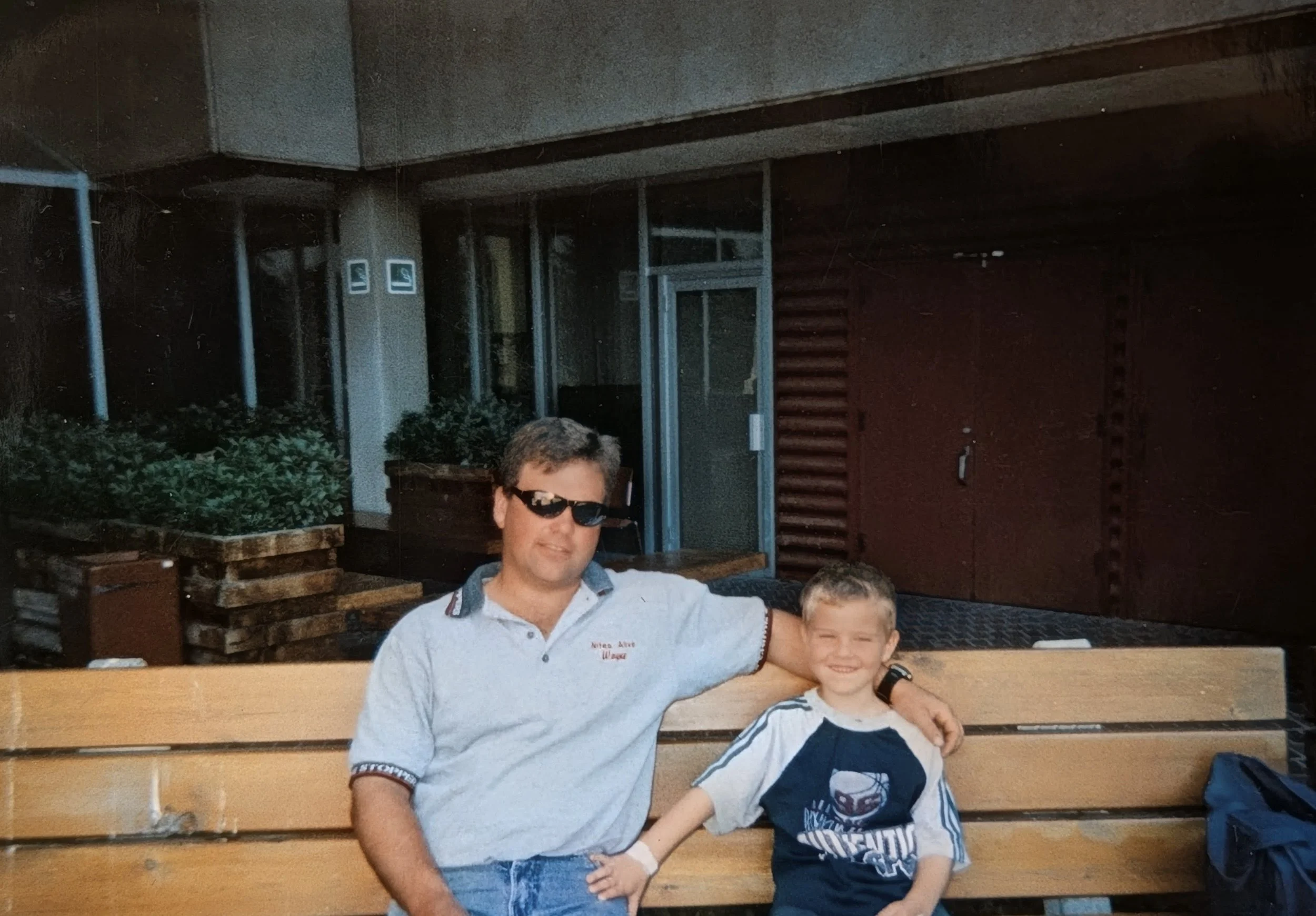
First time at Childrens Hospital, Vancouver
When we arrived in Vancouver, I was met with an entire team of specialists: a cardiologist, neurologist, physiotherapist, occupational therapist, social worker, orthopedic surgeon, and a neuromuscular nurse. They ran an echocardiogram and an EKG, and before the blood work even came back, they had already seen enough. Left ventricular hypertrophy, my left ventricular wall was far too thick, they were 99 percent sure of what I had. On July 23, 1999, at seven years old, I was officially diagnosed with Friedrich’s Ataxia. It wasn’t the answer we had hoped for, but it was finally an answer.
That same day, I was enrolled in the neuromuscular program. For the first year, I returned every three months, and after that, every six months until I turned 19. This all became part of my life starting at such a young age.
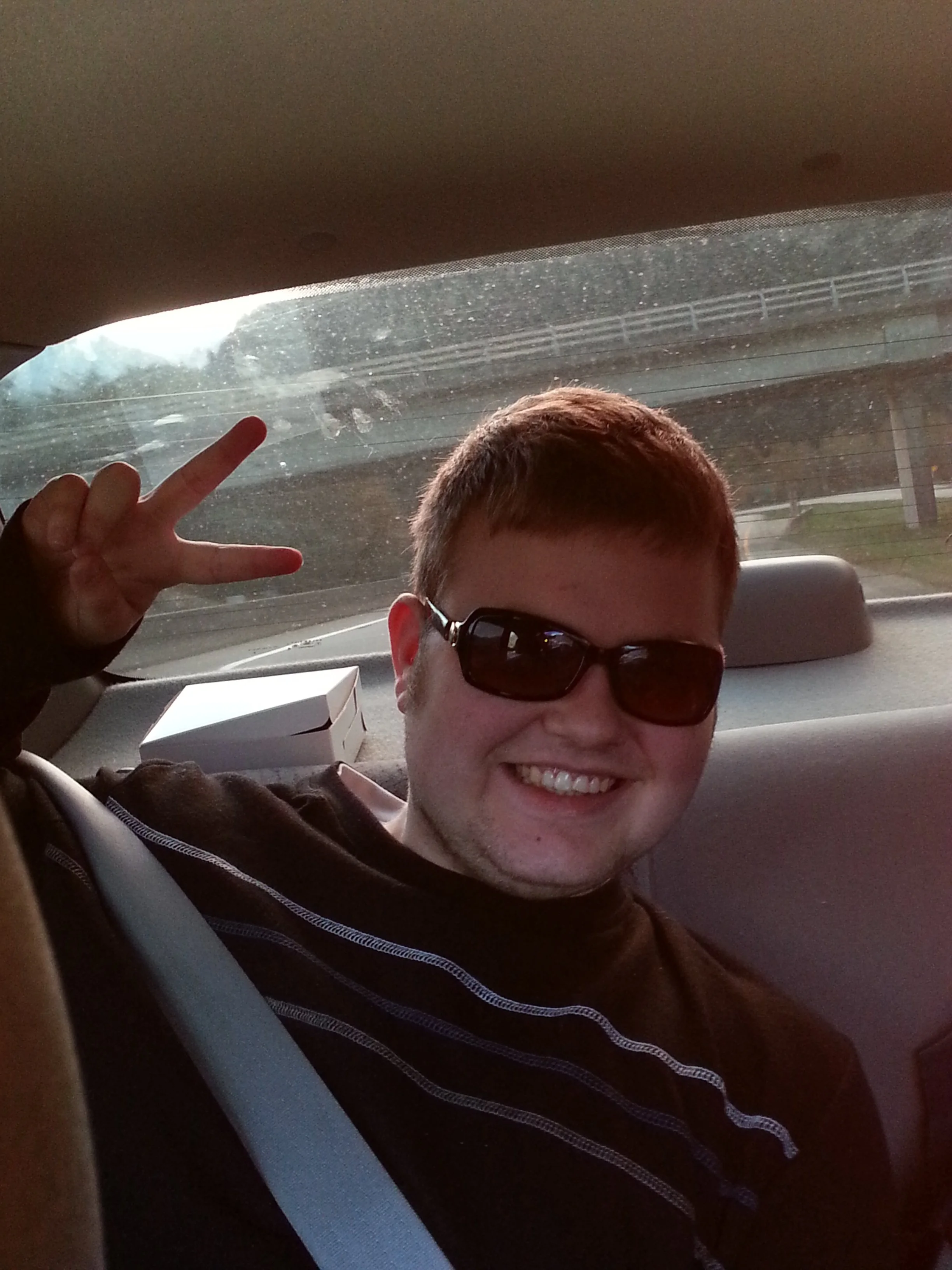
Shortly after my diagnosis, when the internet was still in its infancy, my dad went on a research mission. He found a doctor in Paris, Dr. Massimo Pandolfo, the Chief of Neurology at Erasme Hospital, who had published research in The Lancet Medical Journal. His research was on Ataxia, and the effects of a compound called idebenone on the frataxin protein. The lack of the frataxin protein is essentially the cause of FA. My dad reached out to him and, incredibly, he responded by sharing his published research. Idebenone wasn’t an approved drug at the time, but it was available over the counter in the United States as a dietary supplement.
So in January 2000, at seven years old, we took a trip to Disneyland. After a lot of digging around, unfortunately,
I could not find any pictures to share. Along with the rides and memories, we came back with a supply of idebenone in an unlabelled brown paper bag. Before starting it, my dad spoke with my cardiologist at the children’s hospital, Dr. Human, and shared the research he had found. Dr. Human was familiar with it and supported us giving it a try, but he did request that I wear a Holter monitor to track my heart while on it.
Within six months, the results were incredible. My left ventricular hypertrophy had essentially reversed, and the wall thickness of my heart had shrunk by 30 percent. Dr. Human told us, “If I didn’t know what he had, I would consider his heart normal.” Idebenone seemed to work, particularly during puberty, and I continued taking it for years, importing it from the U.S. from 2000 to 2010.
Later on, at an Ataxia conference in Los Angeles hosted by the National Ataxia Foundation, we learned that idebenone had been approved by Health Canada under the name Catena. But that approval came with a massive price increase, from about $500 a month to nearly $10,000 a month. At a lunch hosted by the pharmaceutical company, they spoke about making the drug available to patients and claimed they weren’t disqualifying anyone. My dad pointed out that at that price, they were effectively disqualifying everyone. Their justification was tied to testing and safety costs, but given that the drug had already been studied for other conditions, my dad called bullshit. I did eventually try the regulated version, but it caused significant facial swelling, likely due to something in the new formulation, so that option didn’t last.
In August 2006, at 14 years old, during my time in the neuromuscular program, I underwent back surgery for my scoliosis that had developed during my childhood. The procedure involved placing two rods along my spine and left me with a scar running from my ass crack all the way up to the bottom of my mullet. The surgery itself took 11 hours, and the recovery was long and difficult. After a week, I was flown home by air ambulance and then transported by ground ambulance back to my house. For the next 11 months, I was miserable. Up until this point, I still could walk; it was a 50/50 split between my chair and walking, albeit my walking looked like I was a drunkard staggering home from the pub. This was also the point when my parents dubbed me with the nickname Rod, because of the rods along my spine.
According to my mom, I was both grumpy and stubborn during that time, which I will neither confirm nor deny. I was supposed to get up into my chair at least three times a day, but I wanted nothing to do with that. I preferred staying in bed, and this led to plenty of arguments between us. At one point, she told me I would never see my friends again if I didn’t get up. Then one day, there was a car accident at the corner of our road, with police and ambulances everywhere. When I asked what was going on, my mom told me if I wanted to know, I’d have to get out of bed because she wasn’t telling me anything. That was enough to get me moving. Looking back, I’m incredibly grateful she pushed me the way she did.
By the summer of 2012, when I was 20, FA had caused atrophy in my hands and feet, and my feet had begun turning inward. I had already graduated from the children’s hospital program, which ends when you turn 19. My orthopedic surgeon, Dr. Riley, referred me to Dr. Calvert, and in his referral letter, he wrote, “Dear Eric, I was hopeful you might assess Kyle Hindley. Kyle, is a 19-year-old Mayan with FA.” This was news to me. I’m fairly certain they meant “male,” but it still gave us a good laugh. This surgery was similar to the one I wrote about in the post titled My Stiletto, though instead of severing the tendons, they were reattaching them.
I ended up having foot surgery, and shortly after being taken to the recovery room, I experienced rapid tachycardia. My parents had just left for their hotel, which was adjacent to the hospital, when they got the call. Thankfully, my dad remembered reading about a doctor in an FA support group who had written about IV fluid limits. FA patients should not receive more than 500 ml of fluids in 24 hours because their bodies can’t process the excess, which can put dangerous pressure on the heart. My dad told the medical team to stop the IV, and they listened. Not long after, the fluid levels in my body dropped, and my heart rhythm returned to normal. It was a close call. Unfortunately, we know of other families who were not as lucky..
And as if all that wasn't enough, in my mid-twenties, I had to start wearing hearing aids, as my hearing had been and still continues to decline to this day. In 2019, I was diagnosed with Diabetes, which you can read all about in my post titled D-Day. Obviously, I only have diabetes because I am so special; only 10% of people with FA get diabetes. And the final piece of this trifecta is my vision, which I started losing in 2020. Goodbye memes, video games, and most of all boobies.
Throughout all of this, some people made a lasting impact along the way. One of them was Cindy Balayewich, a neuromuscular nurse who had a way of making neuromuscular clinic visits feel a little less clinical. She also played a role in introducing me to Robert. We first met briefly in passing, just a quick exchange before going our separate ways. It wasn’t until later, at Canuck Place, where I was part of a teen group for youth with disabilities, that we really connected. Robert also had FA, and it didn’t take long to realize he had a sense of humor that matched mine perfectly. That was the start of a great friendship. There are many more great stories and shoutouts to lots of the other amazing people, including Robert, in my post appropriately titled Canuck Place.
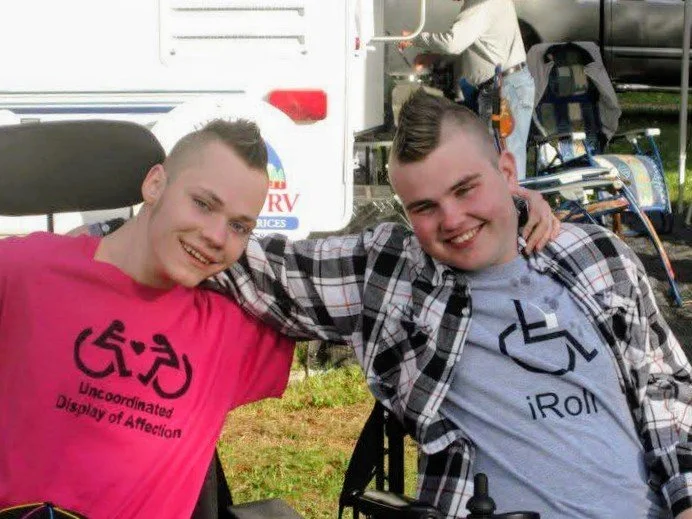
my Brotha from another Motha
Looking back on all of this, one thing stands out more than anything else: the importance of advocacy. Whether it’s speaking up for yourself or having someone willing to fight for you, it matters. It just goes to show not all heroes wear capes. If my parents hadn’t pushed for that referral, if they hadn’t done their own research, if they hadn’t spoken up in critical moments, my story could have looked very different.
I’ve been incredibly fortunate to have parents who never settled for “it’s probably nothing.” And if there’s anything to take from my story, it’s this: if something doesn’t feel right, don’t ignore it. Ask questions. Do the research. Push for answers.
Sometimes, taking that chance changes everything.